Consciousness as Emergence
Modern neuroscience aligns remarkably with Charvakya: the mind is what the brain does. Consciousness is not a ghost in a machine — it is the machine itself reaching a new level of complexity.

Ancient Thought · Modern Reason
Charvakya — the ancient Indian school of radical materialism — held that consciousness arises from matter, that reason overrides revelation, and that the universe needs no invisible hand to explain it. We explore these ideas through modern science and philosophy.
“While life remains, let a man live happily, let him feed on ghee even though he runs into debt.”
— Brihaspati Sutra, ~600 BCE
Modern Philosophy
Two and a half millennia before Darwin, neuroscience, or quantum physics — Charvakya thinkers were asking the right questions.
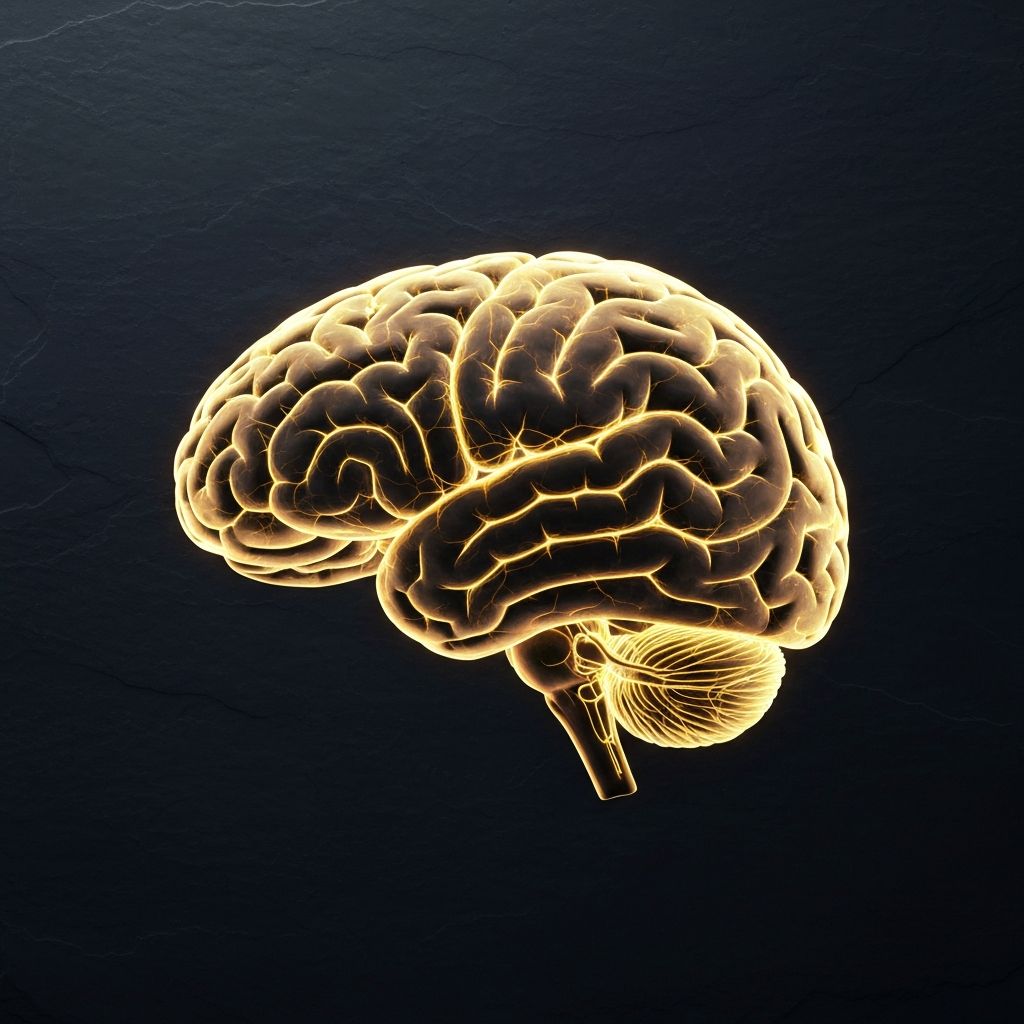
The Charvakas argued that consciousness — what we call the self, the soul — is simply what happens when the four elements (earth, water, fire, air) are combined in the right configuration. This proto-materialist view is now mainstream neuroscience.
Every thought you have is a pattern of electrochemical signals. Every emotion is measurable. The brain, not some ethereal beyond, is the seat of experience. Charvakya knew this before we had the instruments to prove it.
Modern neuroscience aligns remarkably with Charvakya: the mind is what the brain does. Consciousness is not a ghost in a machine — it is the machine itself reaching a new level of complexity.
Quantum field theory reveals that the universe is made of fields, not things. Energy and matter are interchangeable. The Charvakas were right — reality is physical, dynamic, and knowable.
Inference must be grounded in perception. Charvakya rejected inference divorced from sensory evidence — a position echoed by modern empiricism, falsifiability, and the scientific method.
From the Big Bang to cosmic inflation, physics describes a universe with no need for a first cause beyond the laws of nature themselves. The cosmos is self-sufficient.
Are we free? Compatibilists argue yes — even in a deterministic universe, meaningful choice exists. Charvakya ethics were grounded in the present, in agency, in the real world.
Some physicists propose reality is fundamentally informational. Whether or not this is so, it remains an empirical question — the only kind Charvakya philosophy would entertain.
History & Origins
India, 600 BCE. In an age of spiritual ferment, one school asked a different question: what if the material world is enough?
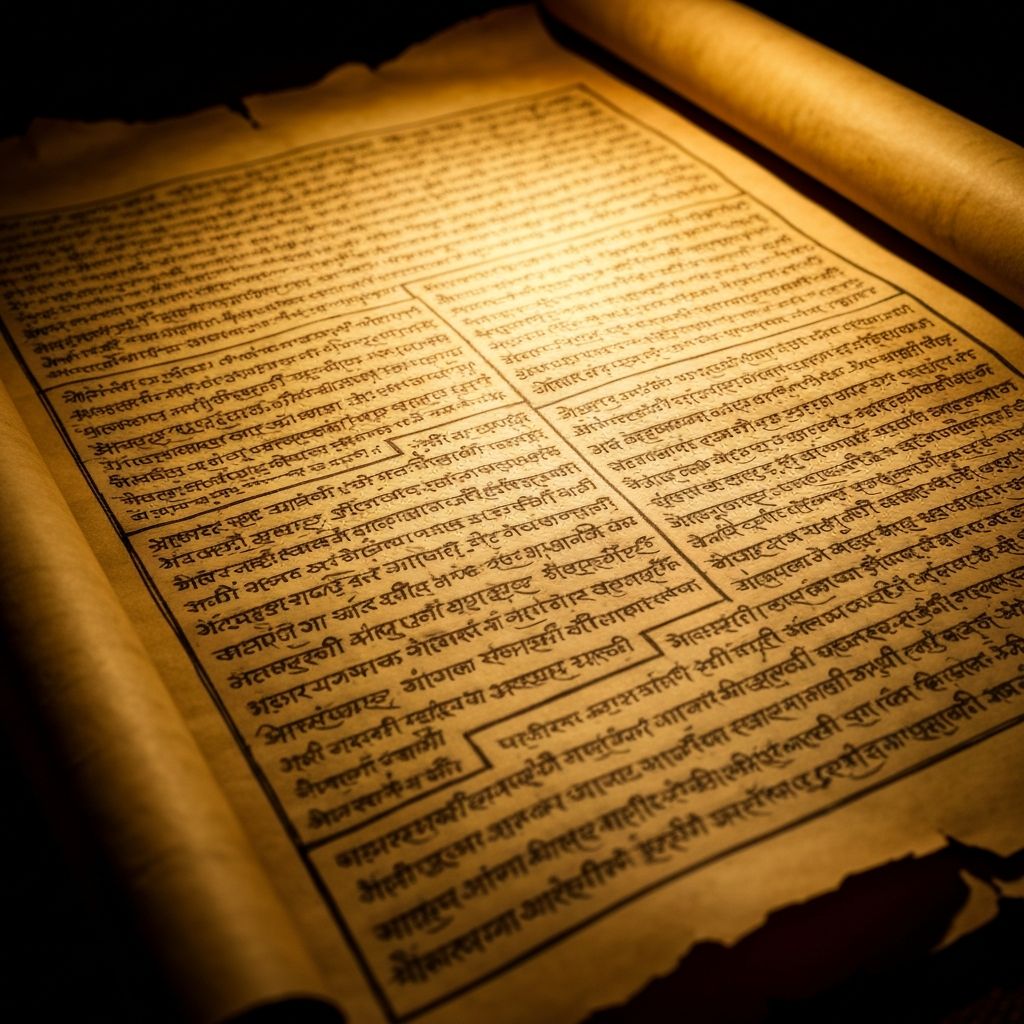
Charvakya (also spelled Carvaka) is the oldest surviving school of materialist and atheistic philosophy in the world. Emerging in the Indian subcontinent around 600 BCE, it predates the pre-Socratic Greeks who are often credited as the first materialists.
The school was named after its legendary founder Charvaka, a disciple of Brihaspati — though both may be semi-mythical figures whose names became associated with a tradition older than any single person. The philosophy is also called Lokayata (world-affirming) and Nastika (heterodox, non-Vedic).
Their core claim: only the four elements are real. Perception alone is valid knowledge. There is no atman (eternal soul), no karma, no rebirth, no moksha. Life is to be lived fully, here, now, with the body and mind you have.
The founding texts of Charvakya thought, attributed to the sage Brihaspati. These sutras laid out a complete materialist philosophy: only the perceptible is real, the afterlife is fiction, and pleasure tempered by wisdom is the highest good.
"Lokayata" — philosophy of the people — was another name for the Charvaka school. It flourished among merchants, thinkers, and those skeptical of Brahminical authority. It was the philosophy of the streets as much as the academies.
Charvakya philosophers engaged in vigorous debate with Vedic, Buddhist, and Jain traditions. Most of what we know of their arguments comes from opponents who preserved their ideas in order to refute them — a testament to how seriously they were taken.
Madhavacharya's 14th-century compendium of Indian philosophy begins with a detailed exposition of Charvaka thought — placing it first, as the most radical point from which all others depart. A grudging tribute to its significance.
The texts were largely destroyed or lost, likely due to their challenge to religious authority. The school faded from institutional life, though its ideas persisted in folk skepticism and heterodox traditions across the subcontinent.
Scholars today recover and reconstruct Charvakya thought from fragments. Its influence on Indian rationalism, secular humanism, and the skeptical tradition is undeniable. Charvakya lives wherever reason refuses superstition.
Core Tenets
Only direct sensory experience constitutes valid knowledge. Inference, testimony, and scripture are all secondary and unreliable. If you cannot perceive it, you cannot know it — you can only believe it.
Reality consists entirely of the four elements: earth, water, fire, and air. All phenomena — including the mind and consciousness — arise from and return to these material constituents. There is no spirit separate from matter.
The self (atman) is not eternal or independent. Consciousness is a product of the body's organisation. When the body dies, the person ends. There is no rebirth, no karma that carries forward, no heaven or hell.
The goal of a rational life is the maximisation of pleasure and the minimisation of pain — not renunciation or austerity. Wisdom lies in choosing pleasures that do not bring greater pains in their wake.
Essays & Writings
Cosmologists now describe the universe as a quantum fluctuation from nothing. Charvakya thinkers asked this question two millennia ago — and refused the easy answer.
Buddhism and Charvakya agreed on one thing: there is no unchanging self. Modern cognitive science confirms it. What remains once the illusion is removed?
The legendary teacher of the gods became, paradoxically, the supposed founder of atheist materialism. What does this tell us about how ideas travel across traditions?
Almost nothing of the original Charvakya corpus survives. We reconstruct it from hostile refutations. This essay asks: what gets lost when a philosophy loses its enemies' respect?
If atoms follow laws, are we free? Charvakya ethics assumed agency. Modern compatibilism defends it. Here's why the debate still matters — and where Charvakya stands.
Charvakya philosophy emerged in a context of radical social inequality. Its skepticism of Vedic authority was also a challenge to class and caste. Philosophy as liberation.
About
Charvakya is an independent philosophical journal dedicated to the recovery and re-examination of India's oldest materialist tradition. We believe ideas should be tested against evidence, that the natural world is fascinating enough without supernatural supplement, and that a life examined rationally is a life well-lived.
Our contributors include philosophers, scientists, historians, and independent thinkers who share a conviction that ancient wisdom and modern knowledge are not adversaries — they are conversation partners across time.
Subscribe to new essays